
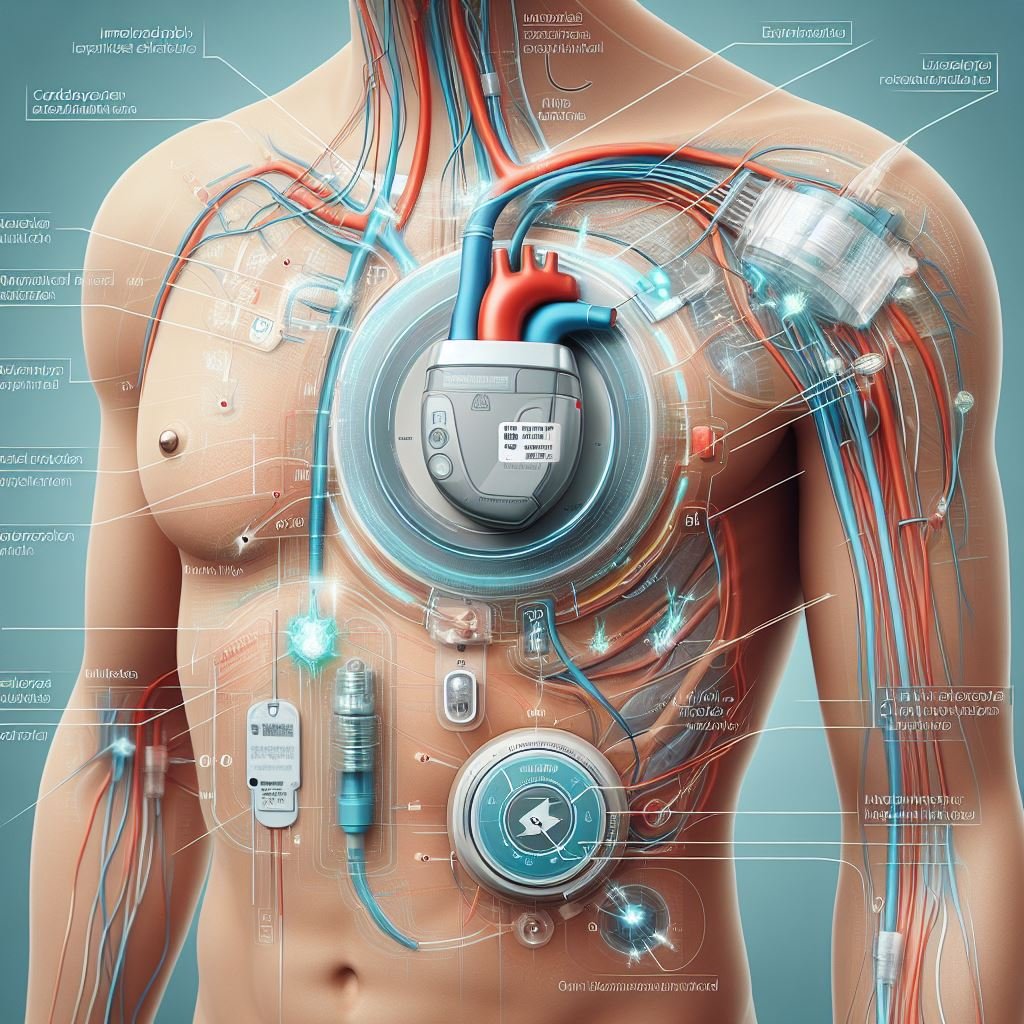
AICD Implantation and Follow-Up Care
Why is the Doctor Performing this Procedure?
Why is this procedure being performed by the doctor? To detect and treat heart rhythm disorders (arrhythmias) before they become life-threatening, it is essential to monitor an abnormally beating heart, whether it beats too quickly (tachycardia), too slowly (bradycardia), or irregularly (atrial fibrillation). Patients with irregular heart rhythms receive specialized care from Dr. Gaurav Yadav, an accomplished interventional cardiologist, at Hridayam Cardiac and Diagnostic Centre, Haldwani. Dr. Gaurav, who has received advanced training in cardiac electrophysiology and interventional procedures, provides individualized treatment plans that include cardiac ablation and AICD (Automatic Implantable Cardioverter-Defibrillator) implantation to help restore and maintain a normal heart rhythm. When it comes to giving people with these abnormal heartbeats specialized care, an interventional cardiologist in Haldwani is essential. An interventional cardiologist with experience in advanced cardiac interventions might suggest suitable therapies, such as cardiac ablation or AICD implantation, to control and enhance the heart's rhythm.
×
![]()
What is an AICD?
A small, life-saving device called an AICD (Automated Implantable Cardioverter-Defibrillator) is implanted in patients who are at risk of experiencing sudden cardiac arrest or dangerous heart rhythm abnormalities. When the AICD detects a potentially fatal arrhythmia, it automatically delivers electric shocks or pacing signals to help the heart return to its normal rhythm. The AICD continuously monitors the heart's rhythm. When necessary, it can also cause the heart to beat more quickly or more slowly. Leads, or electrodes, are thin, flexible wires that track the electrical activity of the heart. Generator: A tiny, metallic device that powers and regulates the system; it is roughly the size of a deck of cards. Dr. Gaurav Yadav uses minimally invasive techniques to perform AICD implantation at Hridayam Cardiac and Diagnostic Centre, guaranteeing accuracy, patient safety, and a quicker recovery.When is an AICD Indicated?
Patients who are at high risk of sudden cardiac arrest or potentially fatal ventricular arrhythmias are advised to have an Automated Implantable Cardioverter-Defibrillator (AICD). Typical Indications Consist of: An earlier instance of either Ventricular Fibrillation (VF) or Ventricular Tachycardia (VT) Loss of consciousness or cardiac arrest brought on by an irregular heartbeat Frequent rapid heartbeats that could result in unexpected death Heart rhythms that are not controllable by drugs or surgery severe adverse effects from anti-arrhythmic medications Weakened heart muscle or heart failure that increases the risk of harmful rhythm abnormalities you or a loved one has been advised an AICD implantation or experiences abnormal heart rhythms, consult Dr. Gaurav Yadav at Hridayam Cardiac and Diagnostic Centre, Haldwani. With his expertise in interventional and electrophysiological cardiology, Dr. Yadav provides comprehensive evaluation, advanced diagnostic care, and personalized cardiac treatment for long-term heart rhythm management.
×
![]()