
Pacemaker Implantation and Follow-up Care
Understanding the Functionality of the Heart's Electrical System
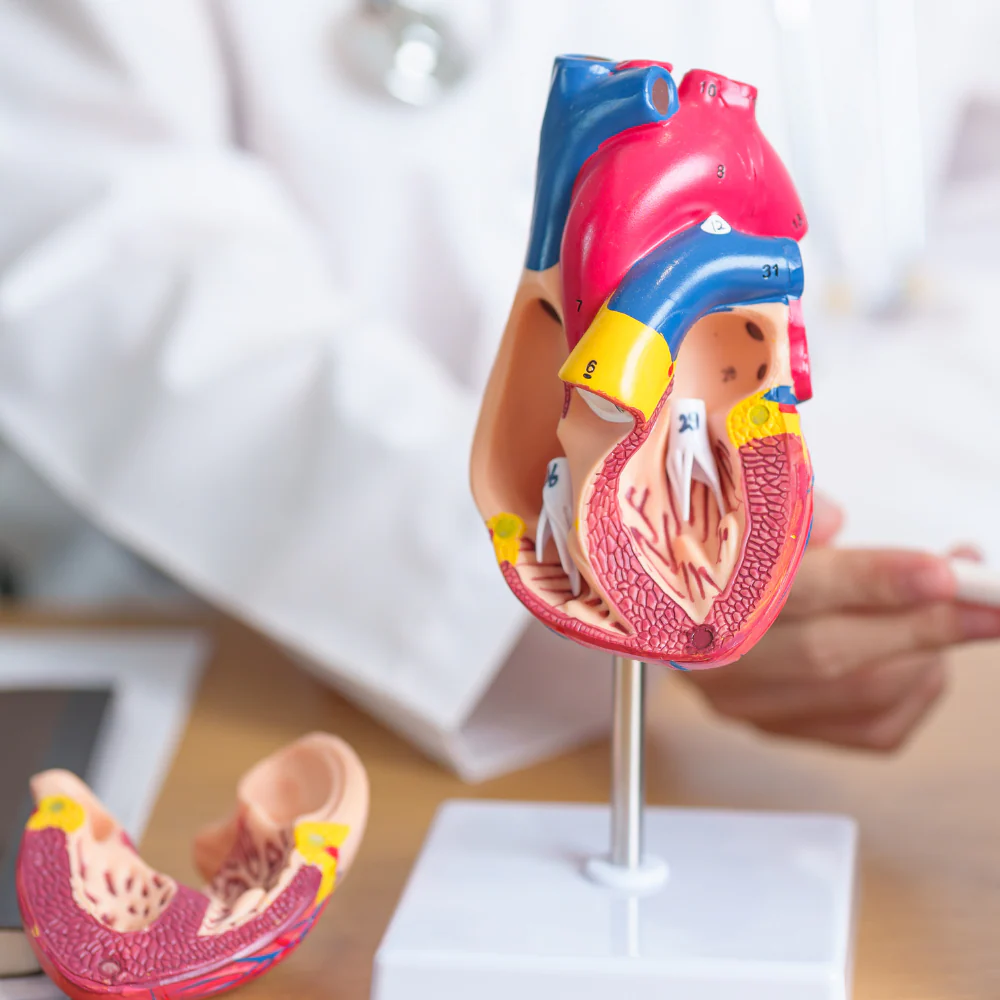
Each heartbeat initiates with an electrical impulse produced by a cluster of specialized cells known as the sinus node (sinoatrial or SA node), situated in the heart's upper chamber. This impulse travels from the heart's apex to its base, synchronizing the timing of every heartbeat. Initially, the atria (upper chambers) contract, propelling blood into the ventricles (lower chambers). Subsequently, the ventricles contract, distributing blood throughout the body. This coordinated rhythm ensures the heart operates efficiently and maintains adequate blood circulation. At Hridayam Cardiac and Diagnostic Centre, Haldwani, Dr. Gaurav Yadav — a leading Interventional Cardiologist — provides comprehensive care for patients suffering from rhythm disorders and conduction abnormalities. With advanced diagnostic facilities and expertise in Pacemaker implantation, Dr. Yadav ensures safe, precise, and patient-centric cardiac treatment.
×
![]()
Why is a Pacemaker Necessary?
As individuals age, the heart's inherent electrical system may deteriorate or become less effective, resulting in irregular heart rhythms or a condition known as complete heart block — where electrical impulses fail to transmit correctly from the atria to the ventricles. This condition can result in slow or erratic heartbeats, fatigue, dizziness, or fainting. In such instances, the implantation of a Pacemaker becomes essential to regulate and sustain a normal heart rate.At Hridayam Cardiac and Diagnostic Centre in Haldwani, Dr. Gaurav Yadav, a proficient Interventional Cardiologist, focuses on diagnosing and managing rhythm disorders through advanced cardiac pacing technology. An ECG (Electrocardiogram) or other diagnostic assessments are utilized to verify the necessity for a pacemaker.
What is the Process of Pacemaker Implantation?
The insertion of a Pacemaker is a secure and minimally invasive procedure conducted under local anesthesia in the Cardiac Catheterization Laboratory (Cath Lab). The procedure is carried out as follows: The patient reclines on a table beneath an X-ray camera. A small incision is made just below the collarbone (typically on the left side for right-handed patients). Thin wires (leads) are introduced into the heart chambers and meticulously positioned using real-time imaging. The optimal position is established based on the heart's electrical signals. These wires are then connected to a compact pacemaker device, which is situated in a pocket beneath the skin.
×
![]()