
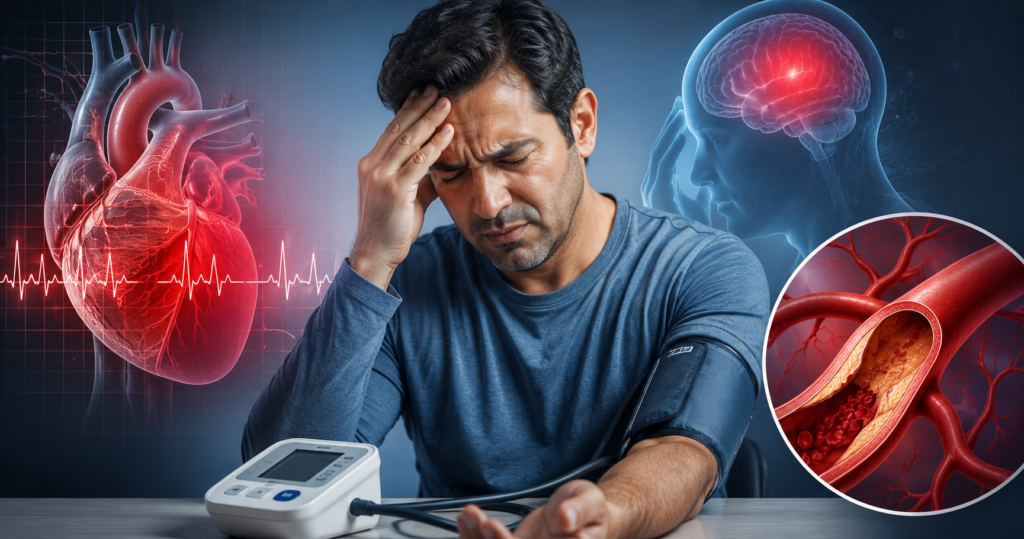
Most people experiencing high blood pressure symptoms feel absolutely fine. No obvious pain, no dramatic warning, nothing that makes them think something is wrong. And that is exactly what makes it so dangerous.
High blood pressure symptoms are often invisible for years, quietly damaging your heart, arteries, kidneys, and brain. Recognizing high blood pressure symptoms early is the only way to prevent this silent damage. By the time most people find out they have it, the damage has already begun. This is why hypertension has earned the name “silent killer”, and it is not an exaggeration.
In India alone, over 220 million adults have high blood pressure, and nearly half of them do not know it. In the Kumaun region of Uttarakhand, where access to regular health check-ups has historically been limited, undetected hypertension remains one of the biggest contributors to preventable heart attacks and strokes.
In this blog, Dr Gaurav Yadav, DrNB Interventional Cardiologist and Founder of Hridayam Cardiac & Diagnostic Centre, Haldwani, explains everything you need to know about high blood pressure symptoms, what causes it, how it harms the heart, and what you can do to protect yourself.
What is High Blood Pressure?
High blood pressure, medically called hypertension, is a condition where the force of blood pushing against the walls of your arteries is consistently too high. Think of it like water flowing through a garden hose. If the pressure is just right, everything works smoothly. But if the pressure becomes too high for too long, the hose starts to strain, crack, and weaken, and so do your blood vessels.
What makes high blood pressure particularly tricky is that it develops gradually, often without any noticeable symptoms. You can feel perfectly healthy and still have dangerously high blood pressure. This is why regular monitoring is not optional; it is essential.
According to the World Health Organization, around 1.28 billion adults aged 30 to 79 worldwide have high blood pressure, yet nearly half of them are unaware of it.
Measure Your Heart Health — Book a Check-Up at Hridayam → https://hridayamclinic.com/contact-us/
Normal Blood Pressure Range: What Do the Numbers Mean?
Here is what the normal blood pressure range looks like and what each reading means:
1. Systolic pressure (the top number) – the pressure in your arteries when your heart beats and pumps blood
2. Diastolic pressure (the bottom number) – the pressure in your arteries when your heart rests between beats
Here is what the normal blood pressure range looks like:
| Category | Systolic | Diastolic |
| Normal | Fewer than 120 | Less than 80 |
| Elevated | 120-129 | Less than 80 |
| High BP Stage 1 | 130-139 | 80-90 |
| High BP Stage 2 | 140 or higher | 90 or higher |
| Hypertensive crisis | Higher than 180 | Higher than 120 |
If your reading consistently falls in Stage 1 or Stage 2, it needs medical attention, even if you feel completely fine. A single high reading does not always mean hypertension, but repeated high readings over time do.
7 Warning Signs of High Blood Pressure You Should Never Ignore
Here is the honest truth: most people with high blood pressure symptoms have no obvious warning signs at all. That is the medical reality. However, when blood pressure becomes severely elevated, these high blood pressure symptoms can appear and should never be dismissed.
1. Persistent Headaches, Especially in the Morning
A dull, throbbing headache, particularly at the back of the head that tends to be worse in the morning, can be a sign that blood pressure is elevated. While headaches have many causes, this specific pattern deserves attention, especially if it keeps coming back without an obvious reason. This is one of the most commonly reported high blood pressure symptoms among patients who visit Hridayam.
2. Dizziness or Lightheadedness
Feeling dizzy or unsteady without any clear reason, not related to standing up too quickly, can indicate that blood pressure is affecting blood flow to the brain. If this happens regularly, it is worth checking your blood pressure and speaking to a doctor.
3. Blurred or Double Vision
High blood pressure can damage the tiny blood vessels at the back of the eye, a condition called hypertensive retinopathy. Sudden or gradual changes in vision, including blurring or seeing double, should be taken seriously and evaluated promptly.
4. Shortness of Breath
Unexplained breathlessness, especially during mild activity or when lying down, can indicate that the heart is working under too much pressure. Over time, hypertension causes the heart muscle to thicken and stiffen, making it harder to pump blood efficiently, which leads to breathlessness. Breathlessness during mild activity is among the high blood pressure symptoms that most often prompts patients to finally seek medical attention.
5. Chest Pain or Tightness
Chest pain or a feeling of pressure in the chest is never something to ignore, regardless of what you think is causing it. In the context of high blood pressure symptoms, chest tightness can indicate that the heart is under serious strain. This warrants immediate medical attention.
6. Nosebleeds
While nosebleeds are common and usually harmless, frequent or heavy nosebleeds without an obvious cause, particularly in someone already known to have high BP, can indicate that blood pressure is poorly controlled. This is more of a warning sign in severe or long-standing hypertension.
7. Palpitations or Irregular Heartbeat
Feeling your heart beating faster, harder, or irregularly is a symptom that should always be investigated. High blood pressure puts extra strain on the heart’s electrical system over time, which can eventually lead to arrhythmias, irregular heart rhythms that may require medical treatment.
Important reminder: The absence of these symptoms does NOT mean your blood pressure is fine. Most people with hypertension feel perfectly well. The only reliable way to know your blood pressure is to measure it regularly.
What Causes High Blood Pressure?
High blood pressure rarely has a single cause. Here are the most common risk factors:
Lifestyle Factors
1. Excess salt in the diet: Salt causes the body to retain water, increasing the volume of blood in the vessels and raising pressure
2. Physical inactivity: A sedentary lifestyle weakens the heart and blood vessels over time
3. Obesity: Excess body weight forces the heart to pump harder to circulate blood through more tissue
4. Smoking and alcohol: Both damage blood vessel walls and cause pressure to rise
5. Chronic stress: Long-term stress keeps stress hormones elevated, which tightens blood vessels and raises blood pressure
6. Poor sleep: Sleep disorders, including sleep apnea, are increasingly linked to hypertension
Medical and Genetic Factors
1. Family history: If your parents or close relatives have hypertension, your risk is significantly higher
2. Age: Blood pressure tends to rise with age as arteries gradually lose their flexibility
3. Diabetes: Blood sugar abnormalities damage blood vessels and increase hypertension risk
4. Kidney disease: The kidneys play a critical role in regulating blood pressure; damaged kidneys can cause BP to rise
5. Thyroid disorders: Both overactive and underactive thyroid can affect blood pressure levels
How High Blood Pressure Damages Your Heart
This is the section that matters most for patients visiting Hridayam Cardiac & Diagnostic Centre. High blood pressure and heart disease are deeply, directly connected, and understanding this connection is what motivates people to take their BP seriously.
1. Hypertension and Heart Attack
When plaque ruptures, a blood clot blocks the artery completely – causing a heart attack. This is why patients with high BP are advised to get coronary angiography.
When a plaque ruptures, a blood clot forms suddenly, blocking the artery completely. The result is a heart attack. This is why uncontrolled high blood pressure is one of the most significant risk factors for hypertension and heart attack and why patients with high BP are routinely advised to get a coronary angiography to assess the health of their coronary arteries.
Learn About Coronary Angiography at Hridayam → https://hridayamclinic.com/coronary-angioplasty/
2. High Blood Pressure and Heart Failure
When the heart has to pump against consistently high pressure in the arteries, it responds the same way any muscle does to overwork: it gets bigger. The heart wall thickens and becomes stiffer over time. This is called hypertensive heart disease, and it is a leading cause of high blood pressure and heart failure.
A stiff heart cannot pump efficiently – leading to fatigue, swelling in the legs, and breathlessness over time.
3. High Blood Pressure and Irregular Heartbeat
High blood pressure and irregular heartbeat are more closely linked than most people realise. The structural changes that hypertension causes in the heart, particularly the thickening of the left ventricle, disrupt the electrical signals that coordinate the heartbeat. This can lead to atrial fibrillation (AF), one of the most common cardiac arrhythmias.
Atrial fibrillation significantly increases the risk of stroke and requires treatment, ranging from medications to device-based therapies like pacemaker implantation in certain cases.
How to Control High Blood Pressure
The good news is that once high blood pressure symptoms are identified and the condition is diagnosed, high blood pressure treatment is very effective when started early and followed consistently. In many cases, lifestyle changes alone can bring blood pressure back to a safe range. In others, a combination of lifestyle changes and medication works well.
Lifestyle Changes That Work
Reduce salt intake: This is one of the single most effective dietary changes for lowering blood pressure. The recommended daily intake of sodium is less than 5 grams (about one teaspoon of salt). Cutting back on processed foods, pickles, and ready-to-eat meals makes a measurable difference.
Exercise regularly: Even 30 minutes of moderate walking most days of the week can lower systolic blood pressure by 5–8 mmHg. Exercise strengthens the heart and makes it pump more efficiently, reducing the pressure it needs to generate.
Lose excess weight: Even losing 5–10% of body weight can produce meaningful reductions in blood pressure. The combination of diet and exercise is the most sustainable approach.
Quit smoking and limit alcohol: Both raise blood pressure and damage blood vessels. Stopping smoking produces almost immediate cardiovascular benefits.
Manage stress actively: Yoga, meditation, deep breathing exercises, and adequate sleep are all proven to help reduce blood pressure over time. Chronic unmanaged stress is a real and significant contributor to hypertension.
Medication for High Blood Pressure
When lifestyle changes alone are not enough, or when blood pressure is significantly elevated, medication becomes necessary. There are several classes of blood pressure medications available today, each working through a different mechanism. Dr Gaurav Yadav at Hridayam carefully evaluates each patient’s overall cardiac health, existing conditions, and lifestyle before recommending the most appropriate medication and dose.
Never stop blood pressure medication without medical advice — stopping suddenly can cause a dangerous hypertensive crisis.
According to the Centers for Disease Control and Prevention (CDC), only about 1 in 4 adults with high blood pressure have it under control, highlighting just how critical consistent treatment and monitoring are.
When to See a Cardiologist in Haldwani
If you have been told your blood pressure is high, or if you are experiencing high blood pressure symptoms mentioned in this blog, or if you simply want to rule out any cardiac impact from high blood pressure symptoms, the most important step you can take is to get a proper cardiac evaluation. High blood pressure does not just affect your readings; it affects your heart, your arteries, and your long-term quality of life.
At Hridayam Cardiac & Diagnostic Centre, Haldwani, Dr Gaurav Yadav provides comprehensive cardiac evaluations for patients with high blood pressure in Haldwani and across the Kumaun region. This includes ECG, 2D echo, Holter monitoring, and, where necessary, coronary angiography, to assess exactly how much your heart has been affected and what needs to be done.
You should see a cardiologist in Haldwani if:
1. Your blood pressure reading is consistently above 130/80 mmHg
2. You have been on blood pressure medication but your BP is still not controlled
3. You experience any chest pain, shortness of breath, or palpitations
4. You have a family history of heart disease or stroke
5. You are diabetic and also have high blood pressure
6. You have not had a heart check-up in Haldwani in over a year and are above 35 years of age
According to the British Heart Foundation, high blood pressure is the single biggest risk factor for stroke and a major risk factor for heart attack and heart failure, making early detection and treatment critically important.
View Our Cardiac Diagnostic Facilities → https://hridayamclinic.com/facilities/
Book Your Heart Check-Up at Hridayam Today
High blood pressure symptoms do not announce themselves with fanfare. They build silently, and by the time high blood pressure symptoms become obvious, the heart has often already been under strain for years. The best thing you can do for your long-term health is simple: get checked.
At Hridayam Cardiac & Diagnostic Centre, Haldwani, Dr Gaurav Yadav and his team are here to give you a complete picture of your cardiac health, clearly, honestly, and without unnecessary alarm.
Book Your Appointment Today → https://hridayamclinic.com/contact-us/
📞 +91 9068740555 | 📧 hridayamheartcarecentre@gmail.com
📍 Hridayam Cardiac & Diagnostic Centre, near Jungle Fiesta Complex, Haldwani, Uttarakhand – 263139
Frequently Asked Questions
1. Can high blood pressure be cured permanently?
Once high blood pressure symptoms are identified and properly diagnosed, the condition can be effectively controlled but not permanently cured in most cases. With consistent medication, lifestyle changes, and regular monitoring, many patients maintain normal blood pressure for years and significantly reduce their risk of complications. Blood pressure checks should ideally start from the age of 18.
2. What is the most dangerous level of blood pressure?
A blood pressure reading above 180/120 mmHg is considered a hypertensive crisis, a medical emergency. If this occurs alongside symptoms like severe headache, chest pain, shortness of breath, or vision changes, seek emergency care immediately. Even without symptoms, a reading this high requires urgent medical attention the same day.
3. At what age should I start checking my blood pressure?
Blood pressure checks should ideally start from the age of 18. For people with risk factors, such as obesity, diabetes, family history of hypertension, or a stressful lifestyle, regular monitoring from the age of 30 is strongly recommended. For everyone above the age of 40, annual blood pressure checks are essential regardless of how healthy you feel.
4. Can stress alone cause high blood pressure?
Acute stress causes a temporary rise in blood pressure; this is a normal physiological response. However, chronic long-term stress can contribute to sustained high blood pressure by keeping stress hormones like cortisol and adrenaline consistently elevated. These hormones constrict blood vessels and increase heart rate, gradually pushing BP higher over time.
5. Is high blood pressure more dangerous if I also have diabetes?
Yes, significantly more so. Diabetes and high blood pressure together damage blood vessels far more aggressively than either condition alone. The combination dramatically increases the risk of heart attack, stroke, kidney failure, and peripheral artery disease. If you have both conditions, close monitoring of both blood sugar and blood pressure is essential.
6. Can I check blood pressure at home accurately?
Yes, home blood pressure monitors are accurate and recommended for patients with known hypertension. Use a validated upper arm cuff monitor, sit quietly for 5 minutes before measuring, take readings at the same time each day, and record the results to share with your doctor.
7. Where can I get my blood pressure and heart checked in Haldwani?
Hridayam Cardiac & Diagnostic Centre in Haldwani offers comprehensive cardiac evaluations for patients with high blood pressure, including ECG, 2D echo, Holter monitoring, and ambulatory blood pressure monitoring. Dr Gaurav Yadav, DrNB Interventional Cardiologist, personally reviews every result and discusses findings clearly with every patient. For patients across the Kumaun region, Hridayam is the closest and most trusted cardiac centre. Call +91 9068740555 to book your appointment today.
According to the Indian Heart Association, South Asians develop heart disease at a significantly younger age than other populations, making early detection and regular cardiac monitoring even more critical for people in India.
Disclaimer: This blog is written for general informational and educational purposes only. It does not constitute medical advice. Please consult Dr Gaurav Yadav or a qualified cardiologist for personalised medical guidance based on your individual condition.
